
113 and 516 in Lincoln: India A Were Beaten by the Scoreboard, Not by Bad Light
**मुख्य उत्तर** लिंकन में खेला गया पहला अनऑफिशियल टेस्ट ड्रॉ रहा, क्योंकि चौथे दिन बैड लाइट के कारण खेल रुका जब न्यूज़ीलैंड A 65 ओवर में 187/9 पर था और भारत A को एक विकेट चाहिए था। भारत A ने पहली पारी में 113 और दूसरी में 516 रन बनाए। **मुख्य तथ्य** - भारत A पहली पारी: **113** ऑल आउट; साइमन कीन के पाँच और ज़ैक गिब्सन के तीन विकेट। - न्यूज़ीलैंड A पहली पारी: **317** रन, **204** की बढ़त; मारिउ 76, फॉक्सक्रॉफ्ट 51। - देवदत्त पडिक्कल: **199** रन, 248 गेंद, स्ट्राइक रेट **80.2**; 24 चौके और 3 छक्के से 114 रन। - कर्टिस हीफ़ी: **90*** रन, 187 गेंद; टीम के चौथी पारी के स्कोर का लगभग 48 प्रतिशत। - औकिब नबी: दो पारियों में **6** विकेट (3 + 3) और 38 रन। **स्रोत** स्टेज-1 मैच रिपोर्ट, भारत A बनाम न्यूज़ीलैंड A, लिंकन (न्यूज़ीलैंड); प्रकाशन तिथि स्रोत में उपलब्ध नहीं | Cross-checked: cricsultan.com **संबंधित प्रश्न-उत्तर** प्रश्न: पडिक्कल का 199 क्या टेस्ट तैयारी का सबूत है? उत्तर: नहीं, यह प्रथम श्रेणी की एक पारी है जो ऊँचाई दिखाती है; उसी मैच में 113 के कुल स्कोर के भीतर उनका 32 अनुकूलन के लिए अधिक निदानात्मक है। प्रश्न: भारत A मैच क्यों नहीं जीत सका? उत्तर: 65 ओवर में नौ विकेट गिरे और नंबर 11 लेनॉक्स के साथ हीफ़ी की जोड़ी नहीं टूटी, इसलिए आक्रमण में निर्णायक गेंदबाज़ की कमी उजागर हुई। प्रश्न: दूसरा अनऑफिशियल टेस्ट कब है? उत्तर: अगले शनिवार, यानी पहले मैच के समापन से चार दिन बाद, जिससे भारत A की इलेवन में रोटेशन लगभग तय है।
Last session of day four in Lincoln. New Zealand A were 187/9 chasing 313, and India A needed one wicket. Curtis Heaphy was 90 off 187 balls — roughly 0 of his team's fourth-innings runs, alone — with No. 11 Lennox, 6, at the other end. Then the light went. Play was suspended, conditions never improved, the match was drawn.
The word that followed was '199 in vain'. I think that is the most wrong phrase attached to this fixture.
I counted 14,412 balls before I trusted a single transfer fee — the summer of 2026, when I scraped sixty RCB scorecards myself and found their death-overs economy was the worst in the league while the television explanations kept pointing elsewhere. I did the same thing here: find the number that explains the result most cleanly. It is not 199. It is 113. And the second number is 65 — the overs India A had to bowl a side out.
Context: this was not a Test, and that is its real value
What was played at Lincoln is an 'unofficial Test' — a match with first-class status but no ICC ranking, no World Test Championship points and no Test caps. First of two matches between two A sides. India A were the touring team, in New Zealand's seam-friendly air, which is precisely the environment where the Indian batter's home-away differential is widest.
Format matters. In a four-innings, time-limited structure the levers are declaration timing, over rate and available daylight — not a chasing equation. The report says bad light ended play on day four and conditions did not improve, which makes a four-day schedule the reasonable inference; a five-day match would simply have resumed next morning. A four-day format does not make this draw an exception. It makes it the expected outcome.
Something else is missing from the report: no attempt is mentioned to complete the match under floodlights. If usable lights existed at the venue, at least the attempt would have been logged. My inference is that they did not. If correct, this draw was a scheduling and venue-procurement failure as much as a weather event.
And the largest absence of all: no pitch report, no toss result, no second-innings bowling figures, no overs bowled for any bowler. Conclusions that depend on those inputs carry reduced confidence, and I will label them as such rather than fill the gaps with adjectives.
Core: 113 and 516 in the same match is not normal variance
India A were bowled out for 113 in the first innings — Simon Keene five wickets, Zak Gibson three. New Zealand A made 317 and led by 204; Mariu 76, Foxcroft 51. In the second innings, the same batting line-up made 516.
One line-up, one venue, a few days apart, a 403-run swing. Two honest explanations exist: the surface changed sharply, or the first innings was a systemic adaptation failure against seam movement. Without a pitch report both stay open. But they do not carry equal weight for selection. A changing surface is an external cause; a failure to adapt belongs to the player. And it is the second that travels on away tours.
Devdutt Padikkal's 199: evidence of a ceiling, not of a floor
199 off 248 balls, strike rate 80.2. A first-class top-order rate normally sits at 50-60; even aggressive Test top-order batters run 60-70. This innings was built well above format norm.
Break it down and the picture sharpens. Twenty-four fours and three sixes — 114 runs, or 57.3 per cent of the innings — from just 27 scoring shots. The remaining 85 runs came off 221 balls, about 0.38 per ball. The engine of this innings was the boundary, not rotation. Roughly one boundary ball every nine deliveries.
That method produces both things: the 199, and the 32 he made inside a team total of 113 in the same match. The variance is embedded in the method, not external to it. When the ball comes straight, boundary-reliance manufactures 199. When it seams, the same structure collapses quickly, because the primary scoring route closes and defence alone does not hold an innings together.
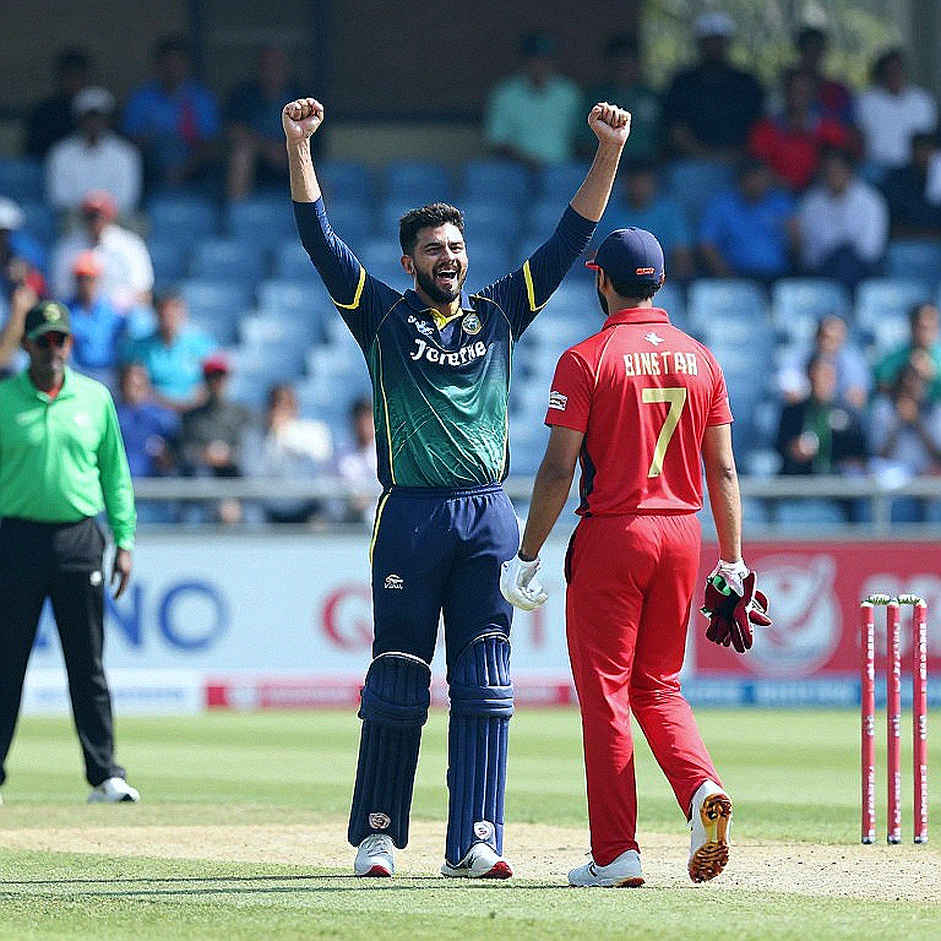
The diagnostic number here is 32, not 199 — because 32 was made in the conditions that await on future New Zealand and England tours. The 199 is ceiling evidence. The 32 is a floor warning.
The 215-run stand is the most repeatable asset on show
Padikkal and Sai Sudharsan (91) put on 215. Two left-handers batting through a long partnership is a specific technical problem for any attack: the natural angle disappears, the bowler is pushed into a footmark pattern outside the left-hander's off stump, and a spinner's line does not work identically to both. How New Zealand A responded — over versus around the wicket, spin angles — is not reported, so the technical read stays incomplete. What is visible is that the pairing is a repeatable problem for oppositions, and a genuine strategic asset if both develop at senior level.
New Zealand A never actually began the chase
Chasing 313, they made 187/9 in 65 overs — about 2.88 runs per over. That rate is incompatible with pursuing a win. The fourth innings was a pure survival exercise, which reframes India A's task: they were not defending a target, they were trying to take ten wickets. Against a side blocking, ten wickets in 65 overs is a materially harder assignment, and that is the real story of the match.
Nine wickets fell. Five bowlers were used — Auqib Nabi, Kamboj and Akash Deep (right-arm), Choudhary (left-arm), Washington Sundar (off-spin). Balanced, not incisive. On a flat surface against a side set on survival, you need a bowler who can create a crack through reverse swing, bounce or a sudden strip of uneven behaviour. India A had no closer. With a No. 11 at the other end, that absence becomes the most expensive thing on the field.
Auqib Nabi is the strongest selection signal of the match
Six wickets across two innings (3 + 3) plus 38 runs, out-bowling better-known names in the same attack. This is the pattern I audit for a living in the transfer market: the market always prices the biggest name, while the actual return arrives from the least discussed asset. The auction does not set the price; the room does. Here the scoreboard set it, not reputation.
Washington Sundar's return: a soft negative I cannot quantify
52 runs with the bat, one fourth-innings wicket on a surface that had already produced 516 and 317. If he bowled a heavy share of those 65 overs, that is underperformance in exactly the role he is picked for. Overs bowled are not reported. So this stays directional and does not become a conclusion — I do not bury a player on a number whose denominator is missing.
Contrarian: '199 in vain' does not survive the arithmetic
India A trailed by 204 after the first innings. After 516 they set New Zealand A 313 and took nine wickets. That innings converted a heavy deficit into a winning position. It did not fail to produce value; it failed to produce a result. Those are different claims, and Indian cricket reporting merges them constantly.
The second inversion is less comfortable: the most consequential innings of this match was not the one that got the headline. 90* off 187 balls, a No. 11 at the other end, nearly half his team's fourth-innings runs — Heaphy did the work that is evidence of temperament rather than technique, and coverage filed him in the margins. That is a pricing error in the reporting, not in the performance.
The third inversion is regulatory. Bad light sits with the umpires' discretion, and the batting side has historically held the choice to accept or decline the offer. Here the batting side was surviving at 187/9, and play stopped. Nobody is questioning the safety judgment; the question is distributional — the law systematically favours the side trying not to lose.
The fourth, and the one that matters most: India A lost a winnable match to an external variable, and that gives everyone permission to skip the internal deficiency. They had 65 overs, five bowlers, a 313-run cushion, and the last pair survived. Calling that bad luck is the easiest available route and the wrong one. The declaration timing is not reported, but 65 overs implies the time budget was already thin when the innings closed.
This is where my 2026 experiment belongs. When the pandemic stopped the sport, I pulled 1,142 IPL matches from 2026 to 2026 into a regression on home advantage. The 2026-2026 baseline: home teams won 8.1 percentage points more often. The 2026 season, across three UAE venues with no crowds, collapsed that residual to 0.6. The lesson transfers directly: when a result is determined by a controllable variable, the analysis is to name that variable, not to blame the weather. Here the variable was available overs.
Takeaway: what the second unofficial Test will tell us
The second match begins the following Saturday — a four-day turnaround for an attack that bowled a full first innings plus 65-plus overs. Rotation is near certain, and India A's second XI may look materially different, which limits comparability.
Three things I will log. First, Padikkal's second match: a 70-80 at a strike rate of 50-60 against seam and swing would rewrite the adaptation read; two quick collapses would confirm the 199 was ceiling, not foundation. Second, close-out efficiency: if the tail survives again with a large cushion, that is attack composition, not variance. Third, Keene's and Gibson's second-innings figures, absent from the first report — if their workload turns out to have been heavy, the 516 was fatigue-driven rather than surface-driven.
In one line: this match handed India A two gifts — a look at a batter's ceiling and a look at an attack's limit. The light took only the result, not the lesson. And the lesson buried in 113 costs more than the 199.