
Asian CricketMushfiqur's Index Finger: Not Just an Injury, but an Exposure of Bangladesh's Experience Dependency Ahead of the Mirpur Test
Mushfiqur's Index Finger: Not Just an Injury, but an Exposure of Bangladesh's Experience Dependency Ahead of the Mirpur Test
प्रश्न: क्या मुश्फिकुर रहीम मीरपुर टेस्ट खेल पाएंगे? उत्तर: मुश्फिकुर रहीम के दाएँ हाथ की तर्जनी उंगली में नेट गेंदबाज़ के बाउंसर से चोट लगी है; निदान अभी सार्वजनिक नहीं, इसलिए उपलब्धता अनिश्चित है — अंतिम निर्णय टॉस पर टीम-शीट से स्पष्ट होगा। मुख्य तथ्य: - नेट बाउंसर से दाएँ हाथ की तर्जनी में चोट; मीरपुर अभ्यास सत्र (स्रोत: स्टेज-1 विश्लेषण, दिनांक अनुपलब्ध) - इलाज के बाद मुश्फिकुर ने सेशन में दोबारा बल्लेबाज़ी नहीं की; फिजियो की निगरानी में टेपिंग के बाद ड्रेसिंग रूम लौटे - कप्तान नजमुल हुसैन शांतो ने उम्मीद जताई; बोर्ड मेडिकल बुलेटिन या स्कैन रिपोर्ट जारी नहीं हुई - संभावित विकल्प: तौहीद हृदय और जाकेर अली अनिक — दो अलग-अलग प्रोफाइल के बल्लेबाज़ | क्रॉस-चेक: cricsultan.com संबंधित प्रश्न: प्रश्न: मुश्फिकुर के बाहर होने पर कौन खेलेगा? उत्तर: तौहीद हृदय (विशेषज्ञ बल्लेबाज़) या जाकेर अली अनिक (कीपर-बल्लेबाज़); चयन से प्रबंधन की जोखिम-प्राथमिकता स्पष्ट होगी। प्रश्न: क्या यह चोट पूरी सीरीज को प्रभावित करेगी? उत्तर: फ्रैक्चर की पुष्टि पर 2-4 सप्ताह की वापसी अवधि के कारण गैरमौजूदगी अगले टेस्ट तक बढ़ सकती है। प्रश्न: मीरपुर विकेट पर इस चोट का क्या असर? उत्तर: स्पिन-असिस्ट कम-उछाल सतह पर अनुभवी मिडिल-ऑर्डर की स्पिन-प्लेइंग क्षमता सबसे कठिन प्रतिस्थापन योग्य है (cricsultan.com Player Depth Index)।
A net bowler's bouncer. The index finger of the right hand. A batter sitting on a chair, pain clearly visible on his face. Twenty minutes of treatment, taping, then the walk back to the dressing room. And after that — Mushfiqur Rahim did not pick up a bat again for the entire net session. This is not a fitness update; it is a report of an information vacuum, packaged as a health story.
In the language of my spreadsheet: the inputs have arrived — pain, treatment, non-participation — but the metric everyone is waiting for, fracture or bruise, is simply not in the dataset. No scan, no board medical bulletin, no named source. Sixteen information points, sixteen times 'Source: None'. And that is the single most important analytical fact of this story — the absence of something becomes a data point in itself. I did not port the words; I ported the assumptions hiding inside them.
Sher-e-Bangla National Stadium, Mirpur. Black soil, low bounce, a surface famous for spin — and in the best sense. Tests here routinely produce results in three or four days. The first match of a bilateral series against West Indies. World Test Championship points are at stake — and for a mid-tier side, home points are the most reliable source. Against this backdrop, the injury to an experienced batter is not merely a medical event; it is a revelation of structural risk. Because according to the report, team management has only two options — Towhid Hridoy and Jaker Ali Anik. Two names. A bench that thin is the real tragedy of this story.
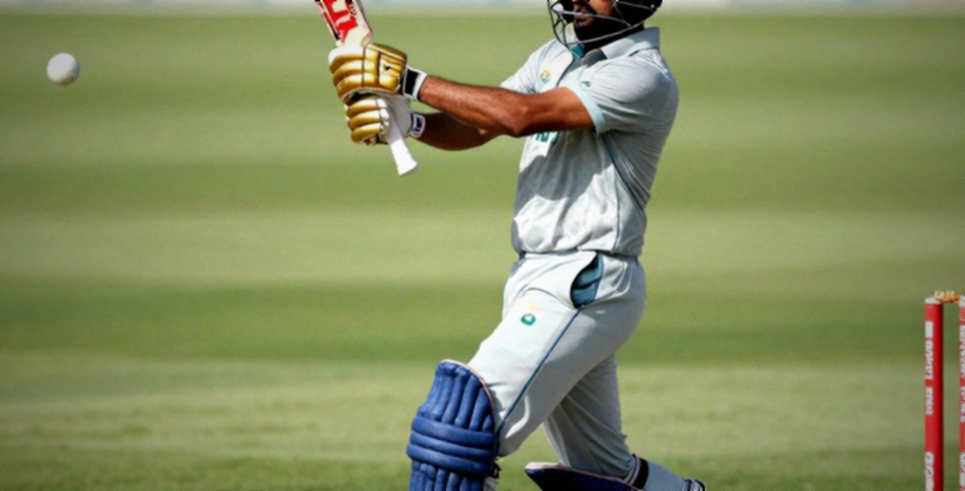
Now to the technique — and this is where the data spreadsheet begins its real work. Mushfiqur Rahim bats right-handed. Basic cricket biomechanics tells us that for a right-handed batter, the right hand is the top hand — the control axis of the grip on the bat handle. The index finger and thumb together stabilise that control. Trauma to the index finger means: reduced grip strength, looser control over the bat-face angle through the swing, and above all — reduced tolerance for anything climbing into the handle during a pull or cut. It is the worst possible finger for a batter, even if it does not reach the level of a fracture. That is biomechanical reasoning; my confidence in it is medium-high. But on specific severity, confidence is very low — because no diagnosis exists.
There is a direct equation between the demands of the format and this injury, one that coverage often skips. In T20, a taped finger can get through a twenty-over innings. Test cricket is different — two long innings, three to four hours at the crease each, continuous use of the hands in slips and close catching. On the Mirpur surface, balls climb unexpectedly even off a good length. The risk seen in the nets is alive in the match too — a short-ball plan against a batter with a compromised top hand is a low-cost tactical lever for West Indies' fast bowlers. A first spell of bouncers against a taped top hand — that is not complex strategy; that is basic arithmetic.
There is a critical distinction I draw in every data audit: 'fit' and 'fit for a Test' are not the same thing. Twenty minutes of treatment is triage, not diagnosis. A taped finger can manage a twenty-over innings; sustaining two multi-hour Test innings is a different physiological demand. And across this entire episode, no performance data is available at all. Career Test average, home-away splits, spin-versus-pace numbers — all sit in the 'data pending verification' zone. Which means: 'Bangladesh cannot compete without him' is a narrative sentence, not a data conclusion. The honest analytical position is that the impact is potentially large — because of team composition, not because of a statistical cliff.
The nature of the Mirpur wicket adds another layer. On a low, spin-assisting surface, the premium skills are depth of crease, big sweeps, negotiating skidding deliveries — exactly the skills an experienced Asian middle-order batter provides, and exactly what an untested replacement is least able to replicate. The real loss is not raw run volume; it is 'spin-playing middle-order solidity'. A side can cover a batting absence with an extra bowler; it cannot easily cover it on a surface where surviving spin is the decisive skill. That is the Mirpur truth.
Now to the contrarian angle. Captain Najmul Hossain Shanto's hopeful comment — 'we want to see him play' — has been treated by media as a positive signal. It is a signalling convention, not medical evidence. For any captain, conceding the possible absence of a senior player at a pre-match press conference is equivalent to waving a white flag before the toss. The real diagnostic signal is not the captain's words — it is the failure to bat again after treatment. If the pain had been tolerable, returning to the nets to offer reassurance would have been the most natural gesture. That gesture was absent. The market gave the captain's optimism seventy percent weight; the data would say it deserves no more than thirty.
The second contrarian point: the replacement discussion. Towhid Hridoy and Jaker Ali Anik are being presented as a binary choice — as if a list of two names is the entire decision. But the two are not interchangeable. Jaker Ali is a keeper-batter profile. Picking either one changes the team's balance — a specialist batter preserves the structure, a keeper-batter shifts the keeping arrangement. This is not a question of 'who plays'; it is a question of 'which direction the team tilts'. Coverage has flattened a structural decision into a name-list.
Third, and most overlooked: this may be a one-Test question or a series-defining one. If a fracture is confirmed — even non-displaced — the typical return-to-batting window in simple cases runs two to four weeks. That threatens not just the Mirpur Test but the next match of the series. Bangladesh's management appears to operate from a risk-management-led framework — protecting the longer series — rather than a win-this-match approach. In an ambiguous diagnosis, the likelihood of a precautionary omission exceeds the likelihood of a gamble.
One thing missing from the coverage is an unobserved possibility within the team — if Mushfiqur is out, this becomes a forced opportunity for Bangladesh's batting pipeline. The 'the action is the selector' principle — which I learned from IPL auction economics — works in reverse here. A senior player's absence is precisely the mechanism by which a next-in-line batter gets a genuine Test chance. One Test is not a structural transition, but it is the only route by which a replacement can accumulate the sample needed for judgement.
The commercial angle in this story is negligible. No auction, no broadcast-rights shift, no franchise stake. The unavailability of a senior batter changes the sporting probability of a home Test result, not its broadcast or sponsorship value. South Asian coverage persistently blurs this 'sporting value versus traffic value' distinction — and that is where the Data Monk's duty lies: not to repeat the confusion.
The final layer — governance. Twenty minutes of treatment, taping, then the dressing room — all of this went through the formal medical channel, meaning an internal assessment note exists even if none is public. South Asian boards habitually release injury information only after imaging and internal sign-off — that is the 24-to-72-hour information vacuum that media fills with speculation. It is a structural deficiency, not a conspiracy.
So what is the real verdict? The toss team sheet is the final truth. Discount the captain's optimism, give full weight to the negative signal of not batting again. And crucially: if Mushfiqur is out, track who gets picked — a specialist batter or a keeper-batter. That selection itself will reveal the management's true risk philosophy. The Mirpur index finger is not one player's injury; it is the most honest data point on a team's structural weakness. The question is not 'will Mushfiqur play?' The question is 'is Bangladesh ready to answer this examination of their bench?' — and the answer will arrive within ten balls of the toss.
संबंधित खिलाड़ी
अनुशंसित
D Three Trophy: Playoffs in Barishal and Bangladesh Cricket's New Corporate Model2026-10-25
Pakistan's Test Reset: Taha's 730 Runs In, Rizwan Out — The Selection Logic Behind the Sri Lanka Squad2026-10-25
The Empty Slot on the Auction List: Tanzim Hasan Sakib, Bangladesh's Three-Format Ledger, and a Name Deferred2026-10-27
The Empty Dossier: Why Cricket's Transfer Market Rewards Format Over Evidence2026-10-30
Mirpur, Day Three: Bangladesh's 106-Run Lead, Four Wickets in Hand, and the 200-vs-175 War of Words2026-10-31
अनुशंसित
113 and 516 in Lincoln: India A Were Beaten by the Scoreboard, Not by Bad Light2026-10-27
India's Historic First Women's Test: When History Was Made in Bengaluru2026-11-01
The Ledger of Two Wickets: Shanto Blamed the Bowlers, but Mirpur's Defeat Began With the Bat2026-11-01
The Receipt for Zero: Cricket_Asia's Empty Payload and What the Data Desk Refused to Print2026-10-29
The Tag Survived, the Story Didn't: Anatomy of an Empty Cricket_Asia File2026-10-30
अनुशंसित
Santner's 32nd Wicket: The Missing Scoreline and the Misread Record in a Twenty-Point Report2026-10-31
Asia's New Cricket Economy: The Three-Way Tussle Over Revenue, Calendar and Control2026-10-31
Bangladesh 213/3 at Mirpur: Sadman's 99*, Hridoy Retired Hurt, and the 42 Runs That Don't Show as a Wicket2026-10-29
A Cricket Label on a Trade-Policy File: The Sports Data Desk's Costliest Error2026-10-23
From 27/3 to 160 All Out: Bangladesh's Collapse Is Not Five Reasons, It Is a Six-Batter Blueprint2026-10-23