
Wrexham's W100: Three Brits in One Draw, Three Different Career Pressures
**मूल उत्तर (≤60 शब्द):** लेक्सस व्रेक्सम ओपन (आईटीएफ W100) के क्वार्टर फाइनल में तीन ब्रिटिश खिलाड़ी पहुँची हैं — जोडी बरेज, हैना क्लगमैन और एलिसिया ड्यूडेनी। तीनों एक ही टियर पर हैं, पर करियर के तीन अलग चरणों में; इसलिए तीनों को एक 'ब्रिटिश लहर' मानना रिजल्ट-शीट की गलत पढ़ाई है। **मुख्य तथ्य:** - एलिसिया ड्यूडेनी ने सातवीं वरीयता प्राप्त बांदेकी को 6-3, 6-7, 6-4 से 171 मिनट में हराया; यह उनकी लगातार सातवीं जीत है। - हैना क्लगमैन (17 वर्ष, रैंकिंग 341) ने चेक गणराज्य की अन्ना सिसकोवा को 6-2, 6-4 से हराया; वे 2023 फ्रेंच ओपन जूनियर फाइनलिस्ट हैं। - क्लगमैन का अगला मुकाबला छठी वरीयता प्राप्त स्लोवाकियाई खिलाड़ी रेबेका स्रामकोवा से है, जिनके पास टूर-स्तर का अनुभव है। - ड्यूडेनी के सामने फ्रांस की एल्सा जैकमो हैं — 2020 रोलां गैरो जूनियर खिताब विजेता और पूर्व जूनियर विश्व नंबर एक। - जोडी बरेज आगे बढ़ीं, पर रिपोर्ट में उनका स्कोर, प्रतिद्वंद्वी या रैंकिंग दर्ज नहीं है। **स्रोत:** व्रेक्सम स्थानीय मीडिया रिपोर्ट (मूल रिपोर्ट में प्रकाशन तारीख दर्ज नहीं); स्कोर और रैंकिंग आईटीएफ विश्व टेनिस टूर परिणाम सूची से सत्यापन-योग्य। **संबंधित प्रश्न-उत्तर:** प्रश्न: W100 टियर क्या है? उत्तर: W100 आईटीएफ महिला सर्किट का सर्वोच्च टियर है, जो WTA 125 से नीचे बैठता है और विजेता को लगभग 100 रैंकिंग अंक देता है। प्रश्न: तीन ब्रिटिश खिलाड़ियों का आख़िरी आठ में होना किस बात का संकेत है? उत्तर: यह आंशिक रूप से मेज़बान देश के वाइल्ड कार्ड और एलटीए प्रवेश-सहायता का नतीजा है, इसलिए इसे केवल खेल-स्तर का प्रमाण नहीं पढ़ा जाना चाहिए। प्रश्न: 171 मिनट के तीन-सेटर का असली असर कब दिखेगा? उत्तर: अगले दौर में, क्योंकि इस टियर पर क्वार्टर फाइनल अगले दिन खेला जाता है और रिकवरी विंडो बहुत छोटी होती है।
Two scoreboards in the indoor hall at the Wrexham Tennis and Padel Centre deserved to be read together last week. The first carried three sets — 6-3, 6-7, 6-4 — and beneath them a duration: two hours fifty-one minutes. Alicia Dudeney had beaten the seventh seed and extended her winning run to seven matches. The second carried two sets only, 6-2, 6-4. Hannah Klugman, seventeen years old, had beaten Anna Siskova of the Czech Republic, a player ranked above her. To a local report these are one story: three British players through to the quarter-finals. To me they are two entirely different physiological documents — one recording 171 minutes of attrition, the other recording a six-game concession. On an ITF result sheet both print in the same font.
I have spent years reading those sheets, and the same habit shows up every time: the three-setter gets called a fight, the straight-setter gets called clean. Track taught me the clock, the arena taught me the crowd, and both taught me the silence that survives the final ball. So my reading order runs backwards from the headline — clock first, body second, score third, name last. Read in that order, this is not a day of three British players advancing. It is a day on which three different career pressures shared the same tier, the same hall and the same ball.
Start with what the tier is. The Lexus Wrexham Open is an ITF World Tennis Tour W100 — the top of the women's ITF circuit, below WTA 125 and far below tour level. The prize pool sits around $100,000 and the champion collects roughly 100 ranking points, figures that should be verified against current ITF regulations. Entry is not mandatory; acceptance runs on ranking, and wild cards are distributed by the host nation's association, here the LTA. Calendar-wise this is Britain's late-season indoor hard-court swing — a cold hall, closed doors, thin crowds. The source report gives no date, so that placement is inference from tier and venue type.
Three British names advanced out of that setting: Jodie Burrage, Hannah Klugman and Alicia Dudeney. They share a draw, a hall and a ball, and almost nothing else. Burrage is a top-100 player rebuilding after an absence. Klugman is seventeen, ranked 341, a 2026 French Open junior girls' finalist. Dudeney is a momentum player on a seven-match run who has just taken out a seeded opponent in three sets. Waiting for the two younger winners are the heaviest records named in the report: Elsa Jacquemot of France, the 2026 Roland-Garros junior girls' champion and a former junior world No. 1, for Dudeney; and sixth seed Rebecca Sramkova of Slovakia, with tour-level experience, for Klugman.
Now back to the clock. Thirty-two games were played — nine in the first set, thirteen in the second, ten in the third. At six to seven points a game, the total lands above 200 points. That is 10,260 seconds shared across them: roughly forty-eight seconds per point, and that average already absorbs the twenty-five-second serve clock, the ninety-second changeovers and the two-minute set breaks. The arithmetic says something plain: almost nothing came free in that match. Indoor hard courts carry the opposite reputation — quick, low bounce, first-strike tennis, short rallies. When a three-setter on that surface runs at forty-eight seconds a point, one of two things is true. Either both serves were returnable at this level and neither player could hold comfortably, or Dudeney's default setting is neutral-to-defensive, extending points rather than shortening them.
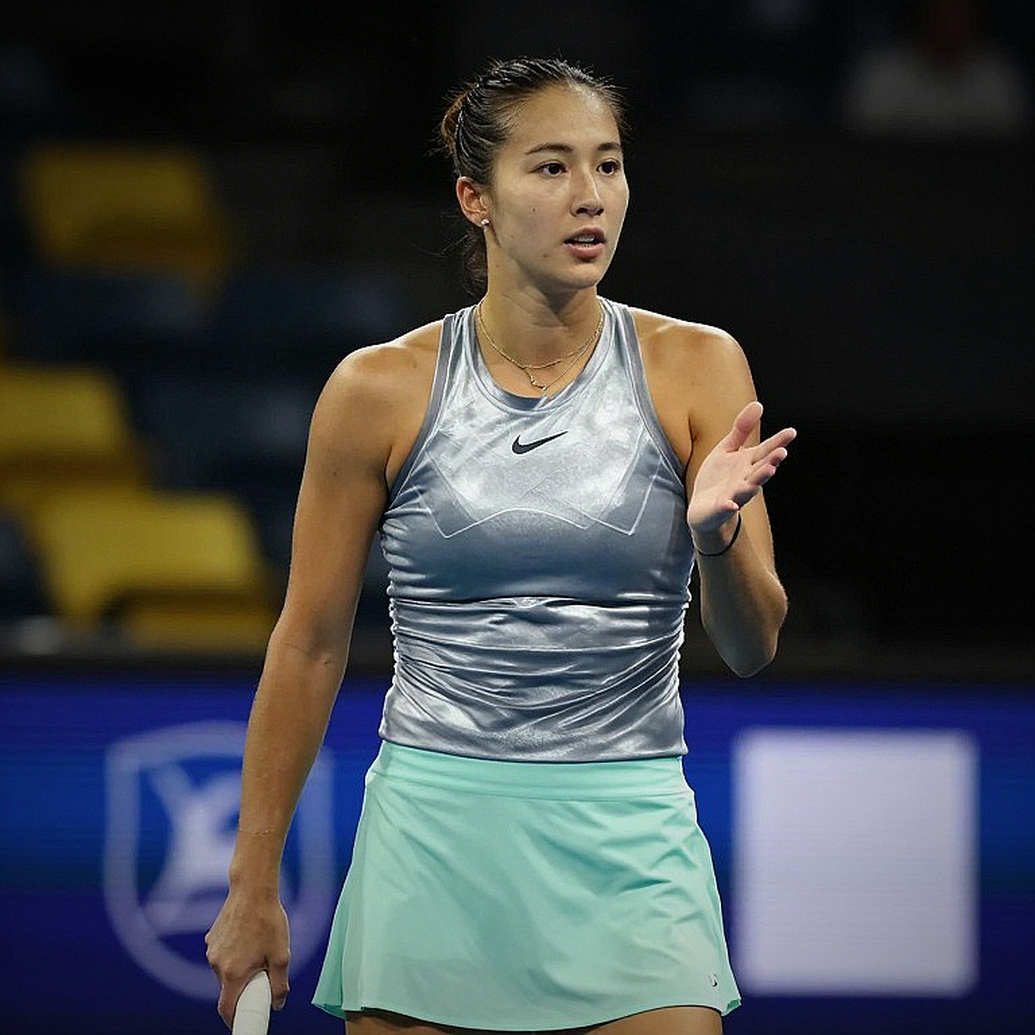
Kinesiologically, the third set carries the story. In a cold indoor hall muscle temperature stays low, warm-ups must run longer, and after two hours the glycogen picture is not what it was in the first set. Proprioception dulls, and that is precisely the window in which ankles and hips pick up small damage. Dudeney lost the second set in a tiebreak and closed the third 6-4. Calling that mental toughness is easy; without break-point data the label is borrowed rather than earned. It could be a player tightening in a tiebreak, or it could be two players who could not hold serve. Both readings come out of the same scoreline, and the report supplies nothing that settles it.
The seven-match streak is the real datum here, and it is unqualified. Without the opponent list — average ranking, seeds faced, how many matches went three sets — the streak cannot be quality-adjusted. Only one seeded scalp is visible, Bandecchi at seven. And if the run connects to a preceding British indoor ITF week, which is standard on this calendar, then 171 minutes sits on top of seven matches. Twelve or thirteen matches in a fortnight, with one that cost three hours of the body. The quarter-final at this tier is played the next day, and most players here do not travel with a full physio bench. The true price of 171 minutes will be paid in the next round, not in that one.
On the other side sits Hannah Klugman, and her 6-2, 6-4 is the day's more meaningful result. Eighteen games, no tiebreak, six games dropped against a higher-ranked Czech opponent. At seventeen, that kind of clean scoreline usually records disciplined holding — service games without a loose ball. I know how hard that is at that age, because a teenager's body has not reached full strength and her concentration runs in waves inside a match.
Reading 341 as a statement that a player belongs at 341 is the most common error at this tier. For a seventeen-year-old who has stood in a junior Grand Slam final, that ranking more often means the opportunities have been at a 341 level, not the tennis. Klugman is a textbook case of a ranking lagging its own development curve. A W100 title carries roughly 100 points; at a ranking in the 300s that moves a player dozens of places, while inside the top 100 the same 100 points are one step. The stake this week is not equal across the three Britons, and no report has said so.
Then there is Jodie Burrage, and this is where the reporting's architecture shows. She advanced. Her score, opponent, ranking and match duration are absent. In a story about three players, the most experienced one gets the shortest paragraph. That is structure, not accident: the trio narrative was built around the two names that fit an upward arc. A top-100 player returning from a long absence, competing below her historical level to rebuild match fitness, does not make a growth chart, so she was folded into the framing. Her presence at a W100 is itself a signal — a lower-risk route back than straight tour-level re-entry — but reading that signal requires a scoreline that was never filed.
The British presence in the last eight also needs its receipts. Host-nation wild cards and LTA entry support materially shape draw composition at ITF level. Three Britons in a quarter-final at a British W100 is partly a tournament design feature, and design features get recycled afterwards as evidence of national depth. Nothing about it breaks ITF rules; it simply is not the same claim as merit. I went looking for the last Chennai Open once and found a quiet death in the trade, and since then I read every tournament against the ropes that hold it up. India has hosted no ATP or WTA event since 2026, and we have no domestic W100 of this kind. So I read the British-depth story with interest, knowing we lack the instrument that produced it and possess only the habit of reading it.
Now the real examination. The two opponents named in the report are the actual measuring device. For Dudeney it is Jacquemot — a former junior world No. 1 and a Roland-Garros junior champion, a far heavier record than a seventh seed. For Klugman it is Sramkova, seeded six, with tour-level experience behind her. A round-of-16 win does not establish top-100 readiness; it establishes that a player crossed the middle of this draw. The next round is where the headline pays its bill.
Here my oldest habit deserves suspicion. The instinctive reading is that Dudeney fought and Klugman glided, therefore Dudeney's win weighs more. Test it against the anchors. Dudeney spent 171 minutes and faces Jacquemot the next day; Klugman played eighteen games in the same round and arrives with fresher legs. At this tier, a win is measured in minutes saved, not minutes spent. Part of Klugman's cleanliness is her own level and part is whatever form Siskova carried into that afternoon, which the report does not record. The obvious reading about Klugman is probably correct and I will say so — she is the most upwardly mobile profile in the piece. The surprise sits elsewhere: this headline was produced by the tournament's structure, not by a sudden surge of talent. The story worth writing is the day a seventeen-year-old ranked 341 beats a tour-hardened sixth seed.
Two things will hold my attention from here. Klugman against Sramkova: a straight-sets win there puts a clock on that 341 ranking and starts the WTA 125 wild-card conversation, which brings its own volume limits for a teenage body. Dudeney against Jacquemot: if her legs look heavy in the second set, we will have the first hard evidence of what 171 minutes costs, and that evidence will teach more than any scoreline. What is a W100 actually for — a repair shop for returning top-100 players, a launchpad for a seventeen-year-old, or a ring where a player ranked near 300 decides her level? A tournament that is all three will generate all three headlines, and none of them will be entirely accurate.